Non-Standard Customization: The Professional Pathway for Foundry Equipment from "General-Purpose" to "Application-Specific"
In the foundry industry, have you ever encountered such dilemmas: while standard equipment on the market appears feature-rich, it always falls "just short" of your actual production scenarios—it doesn't fit the workshop floor, the castings are too specialized, or the process requirements are too stringent. In such cases, what you need is not a "compromise," but a set of non-standard customized solutions.
I. What is "Non-Standard Customization" of Foundry Equipment?
"Non-standard" refers to "non-standardized." While standard equipment is mass-produced according to general specifications, non-standard customized equipment is tailor-designed and manufactured based on factors such as the customer's production scenarios, casting categories, process requirements, and workshop layout. Standard equipment means "using what is available," while non-standard equipment means "manufacturing what is needed."
II. Why Does Foundry Production Require Non-Standard Customization?
The unique nature of foundry production makes it difficult for standard equipment to meet all requirements:
1.Constrained workshop space hinders the installation of standard equipment;
2.Specially shaped castings demand specific process adaptations;
3.Different production capacity scales require vastly different equipment configurations;
4.Environmental standards vary—emission limits and energy consumption requirements differ across regions;
5.Automation levels vary—some require fully automatic unmanned operation, while others need semi-automatic flexible handling.
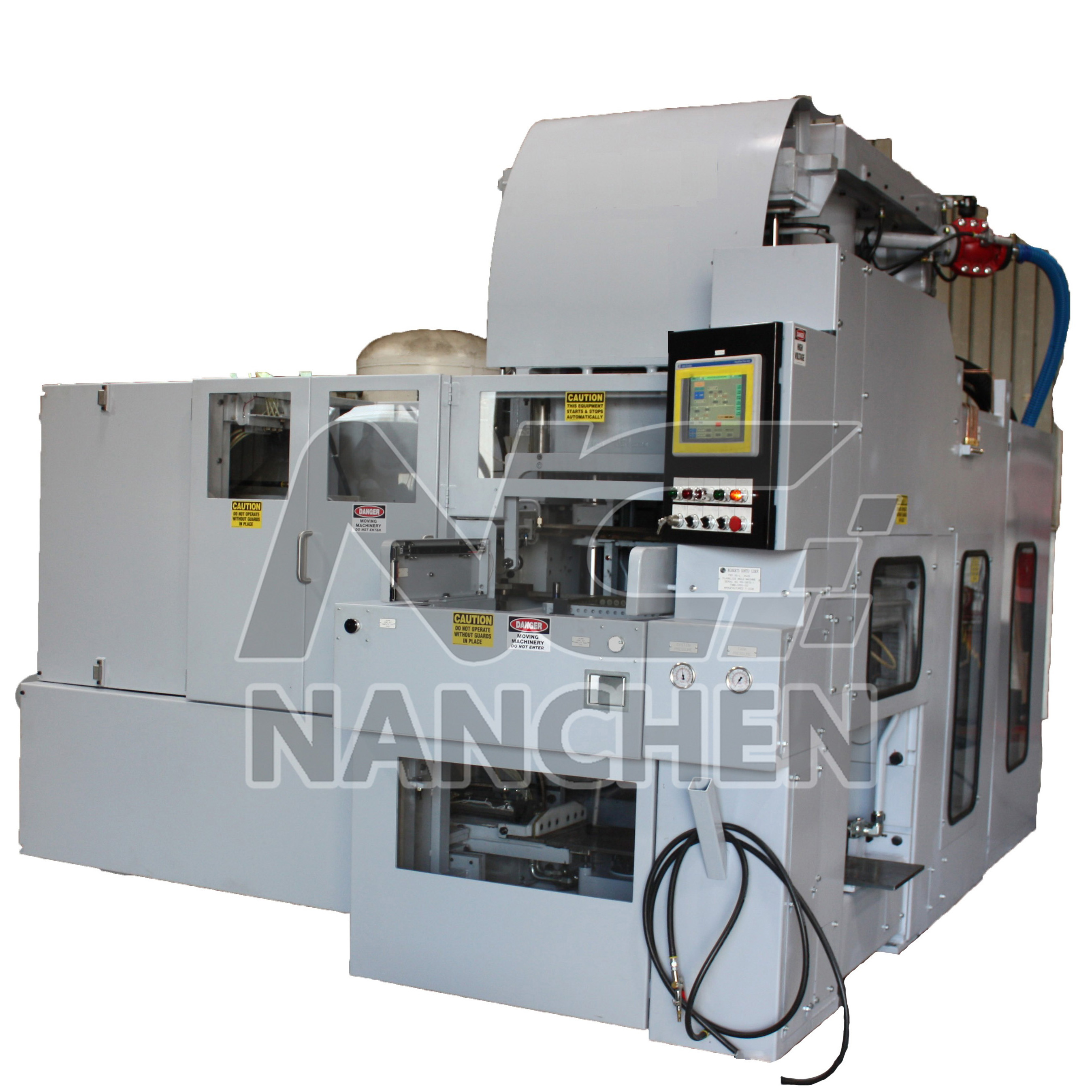
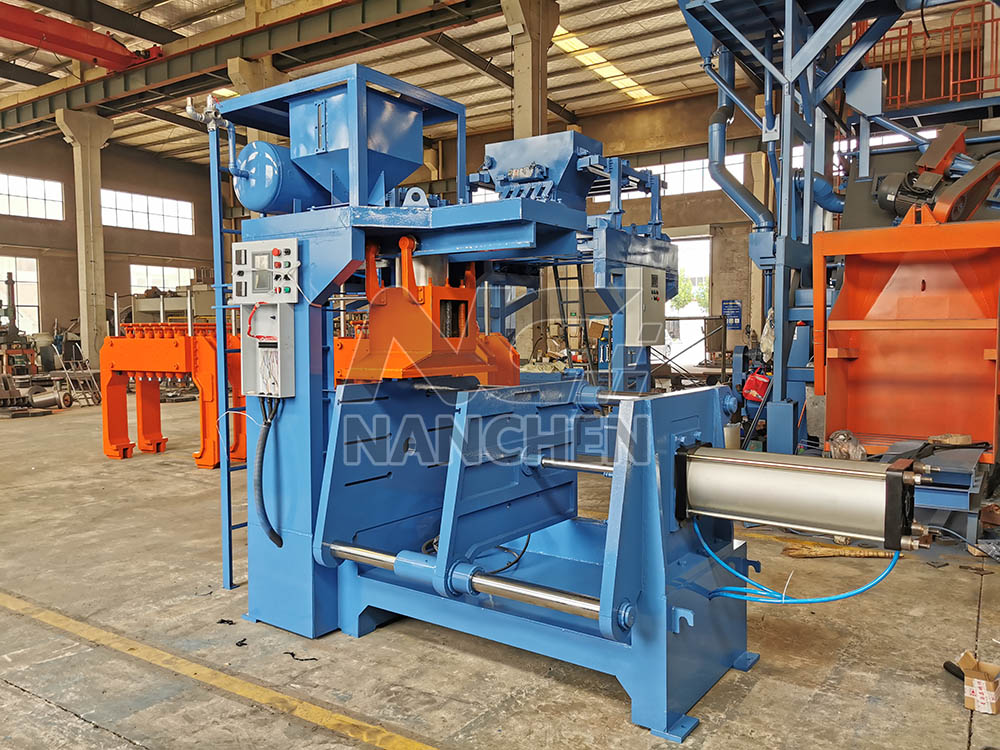
Taking the core shooter as an example, different castings impose distinct requirements on sand shooting methods, clamping methods, heating systems, and core box dimensions. Resin sand production lines require even more personalized designs based on casting materials, output volumes, and sand reclamation needs. It is precisely these vastly different production conditions that make non-standard customization a standard practice in the foundry machinery sector.
III. How is Non-Standard Customization Achieved?
Taking Qingdao Nanchen as an example, non-standard customization generally follows these steps:
1. Requirements Research — The technical team visits the site to investigate casting categories, output targets, workshop conditions, process difficulties, etc.;
2. Scheme Design — A tailor-made production scheme is designed around the customer's core needs;
3. Customized Manufacturing — Equipment is manufactured according to the exclusive scheme, with high-standard quality inspections executed throughout;
4. Installation and Commissioning — On-site surveying, installation, and commissioning ensure the equipment perfectly fits the customer's production;
5. Production Support — Operator training and lifetime maintenance services are provided.
IV. What Practical Problems Can Non-Standard Customization Solve?
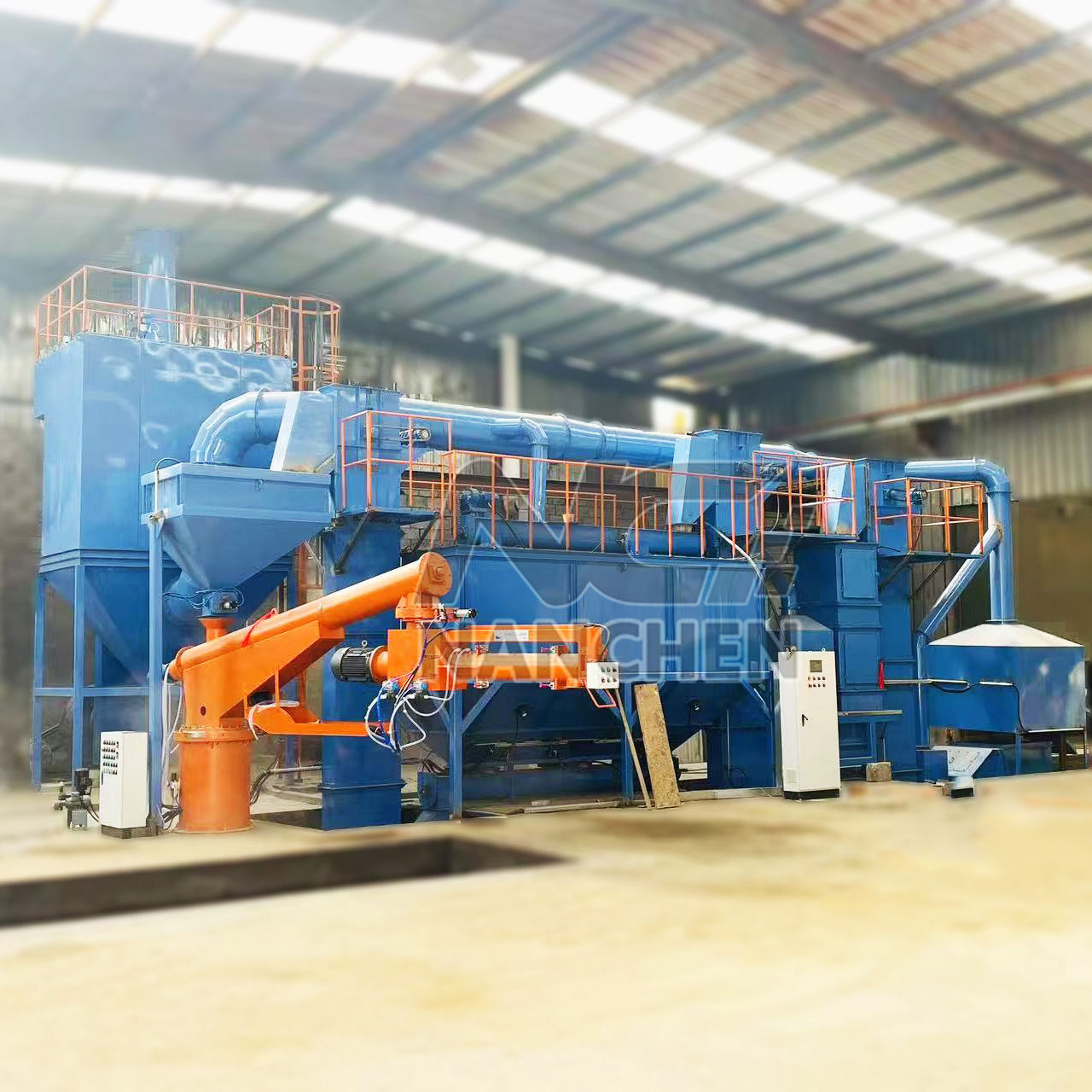
Here is a real case from our company. A client faced issues including limited site space, insufficient cooling time for castings, difficulty in separating steel shot from impurities, as well as insufficient production capacity and non-compliance with environmental regulations. Standard equipment could not solve all these issues simultaneously. After extensive research into various foundry equipment solutions on the market, the client ultimately chose to collaborate with us.
Upon receiving the client's requirements, our team centered the solution around the shell molding process and custom-designed a complete steel-shot filled shell molding line to address the client's three major pain points:
Space challenge — A double-layer cooling section paired with a liftable shuttle car achieved layered cooling for 120 mold boxes, increasing space utilization by 50%;
Separation challenge — A multi-stage separation system combining "drum screening + magnetic separation + cascade air classification" achieved a separation efficiency of 99.5%;
Environmental and capacity challenges — The continuous design coupled with a high-efficiency dust removal module ensured the cooled steel shot temperature was ≤65°C and the dust concentration was <5mg/m³.
After commissioning, all core issues were thoroughly resolved, with production capacity far exceeding expectations. The client highly recognized the product reliability, leading to in-depth cooperation on multiple subsequent projects.
This is the value of non-standard customization—making equipment serve production, rather than forcing production to adapt to equipment.
V. When Should You Consider Non-Standard Customization?
You might consider non-standard customization if you encounter the following situations:
1.Standard equipment does not match the workshop layout or existing production line;
2.Casting products have special material, shape, or precision requirements;
3.Standard equipment cannot precisely achieve the defined production capacity targets;
4.You need automation upgrades in certain processes, but no ready-made solution exists on the market;
5.You have requirements for environmental protection and energy consumption that exceed industry standards.
Foundry is a craft that "adapts skills to materials," and accordingly, foundry equipment should be "made to meet specific needs." Non-standard customization is not about being "exceptional" for its own sake, but about returning equipment to its essence of service—serving the product, serving the workshop, and serving production goals.
Qingdao Nanchen always adheres to a customer-needs-oriented approach, upholding high-quality conventional products as the foundation of our company, while driving development through the R&D and manufacturing of mid-to-high-end, non-standard, and specialized custom products. When standard products cannot meet your production requirements, we are ready to leverage our professional expertise to provide you with the most suitable solutions.