Differences Between Centrifugal Reclamation and Rubbing Reclamation for Used Sand Film Removal
Centrifugal reclamation and rubbing reclamation are the two most widely used physical reclamation methods in foundry used sand recovery. This paper compares the differences between the two methods in detail from four aspects: working principle, reclamation characteristics and film removal mode, film removal efficiency and impact on sand grains, and typical equipment.
I. Principle Comparison
The principle of centrifugal reclamation is to throw used sand at a high speed onto fixed wall plates by centrifugal force. The violent impact between sand grains and wall plates, as well as between sand grains themselves, breaks and peels off the surface binding film. In short, it is impact film removal.
The principle of rubbing reclamation is to subject used sand to continuous grinding and rubbing inside the equipment, so that the binding film is gradually "rubbed off" under the action of shear force and abrasion, which belongs to friction film removal.
II. Film Removal Mode and Film Removal Efficiency
Centrifugal reclamation adopts impact film removal, and the film removal rate of a single pass through the equipment is usually about 25%. Due to the low single-pass efficiency, multi-stage centrifugal reclamation in series is often used in industry to achieve a high total film removal rate.
Rubbing reclamation adopts friction film removal with a relatively high single-pass film removal rate, which can effectively peel off thick binding films. Therefore, only one or two stages of rubbing reclamation are usually required to meet general reclamation requirements.
III. Reclamation Characteristics and Impact on Sand Grains
Centrifugal reclamation is destructive reclamation. Sand grains are prone to breakage during impact film removal, producing a large amount of fine powder and increasing the burden of subsequent dust removal. However, it can round the edges of sand grains to a certain extent and improve the flowability of sand.
Rubbing reclamation is protective reclamation. The breakage rate of sand grains is significantly lower than that of centrifugal reclamation, which can better retain the original morphology of sand grains and produce less fine powder. However, the rounding effect of rubbing reclamation on sand grains is not obvious, and the edges of sand grains change little.
IV. Typical Equipment
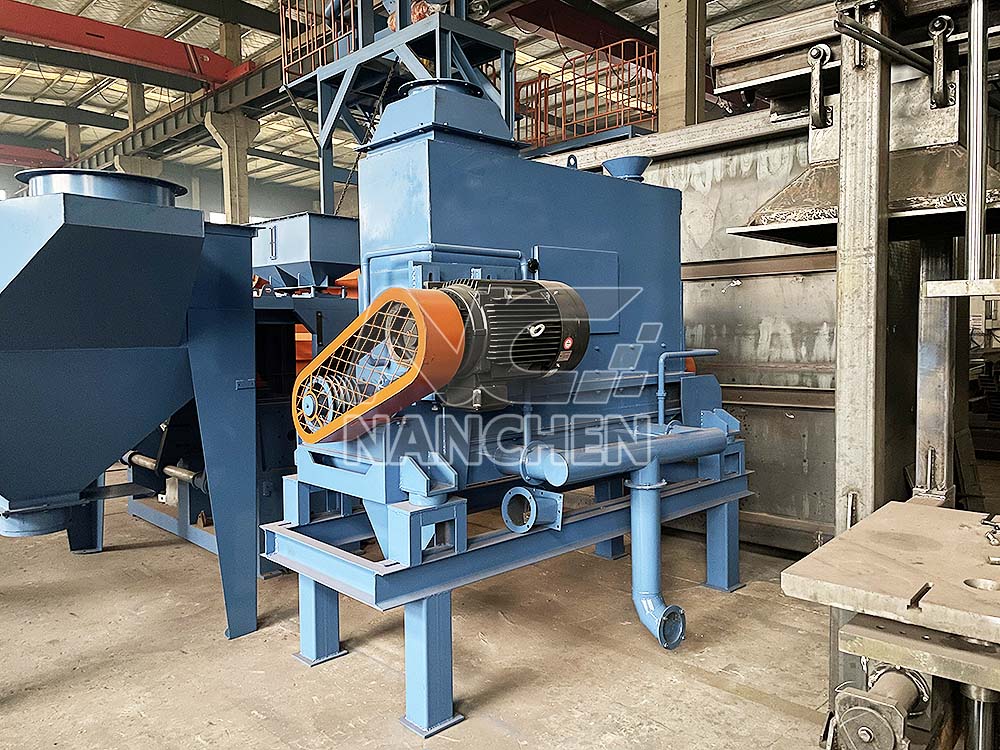
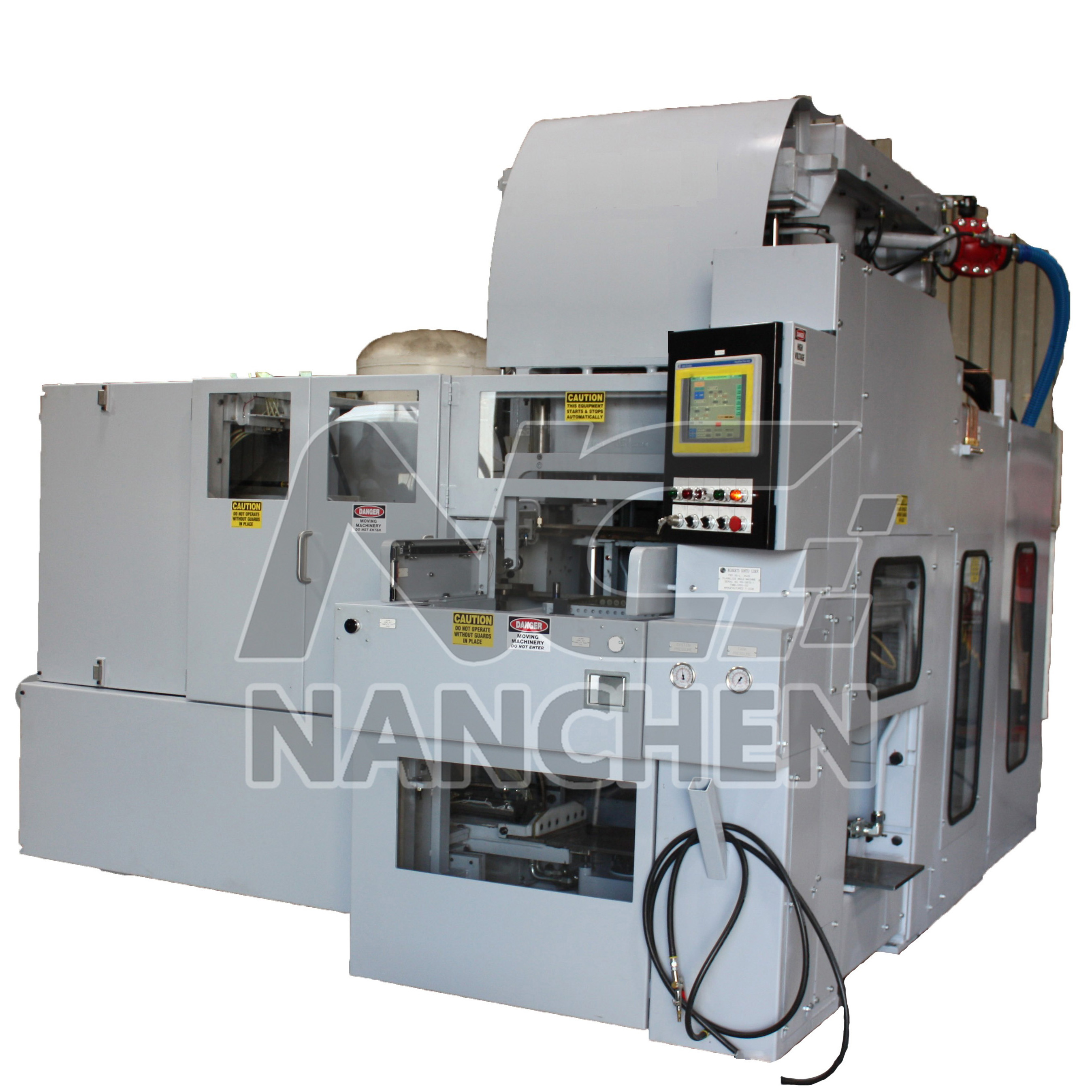
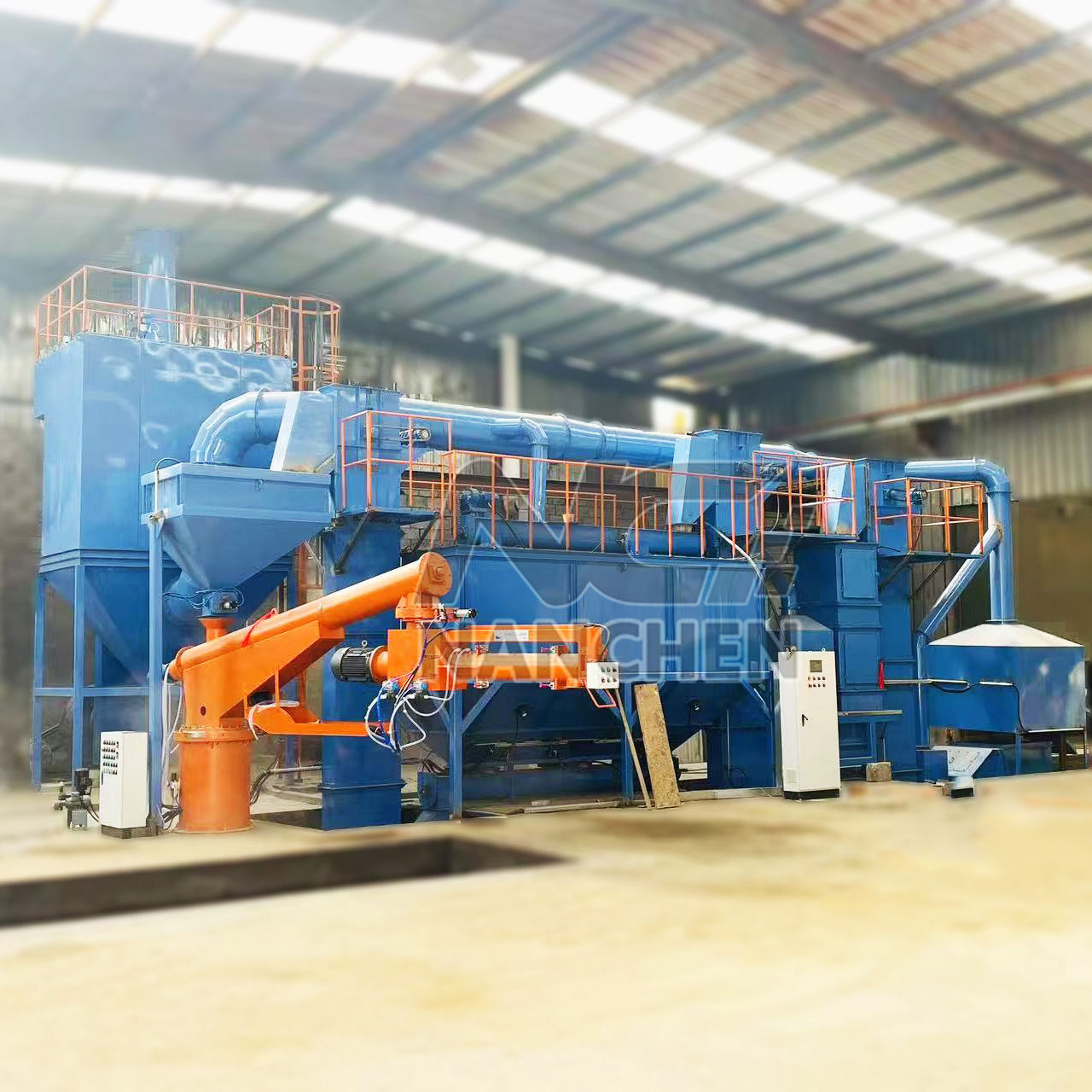
The relevant equipment of Qingdao Nanchen Intelligent Equipment Technology Co., Ltd. is highly representative: the S52 series eddy current reclaimers are commonly used for centrifugal reclamation, which feature compact structure, large processing capacity and are suitable for large-scale production; the S53 series rubbing reclaimers can be selected for rubbing reclamation, which integrate crushing and film removal functions, are suitable for fine processing, and can achieve complementary advantages when matched with the S52 series.
In summary, centrifugal reclamation has strong impact force and thorough film removal, but features a high sand grain breakage rate and high energy consumption; rubbing reclamation is mild and efficient, with intact sand grains and less fine powder, but its ability to remove tough binding films is slightly inferior to that of multi-stage centrifugal reclamation.
In actual foundry production, rubbing reclamation is often used as primary reclamation, followed by centrifugal reclamation in series as final reclamation, forming a combination of rubbing first and centrifugation later. This method balances quality and economy, and has become the mainstream configuration of modern foundry used sand reclamation processes.